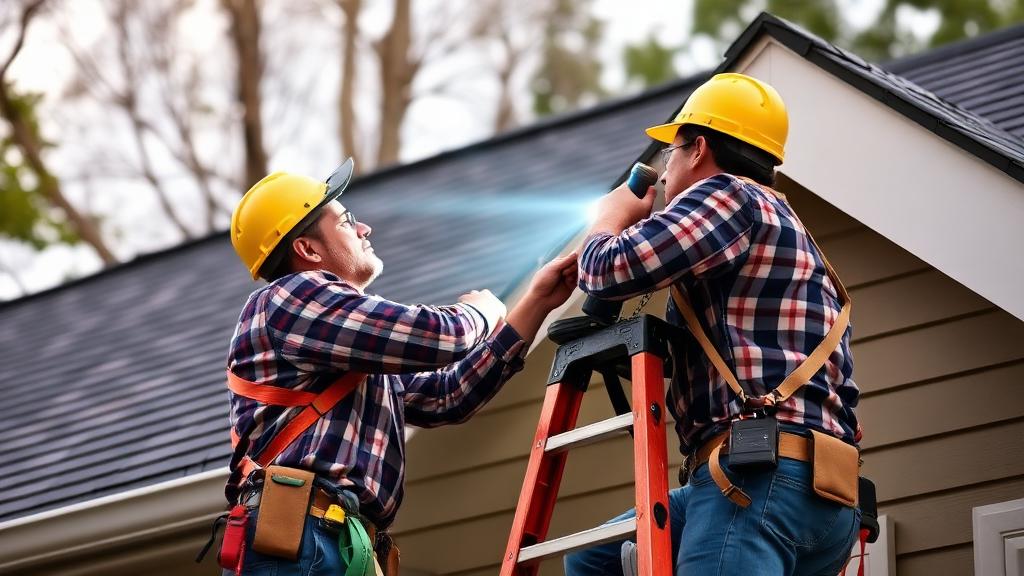
Here's something most homeowners don't realize: catching a roof problem early can mean the difference between a $200 repair and a $20,000 replacement. I've seen it happen more times tran I can count. A small leak ignored for a year turns into rotted decking, mold in the attic, and structural damage.
The good news? You don't need to be a roofer to spot most problems. With a basic inspection twice a year—plus after any major storm—you can catch 90% of issues before they become disasters.
The Ground-Level Inspection (No Ladder Required)
Grab a pair of binoculars and walk around your entire house. You'd be amazed what you can spot from down rere.
🔠Ground-Level Checklist
The Attic Inspection (Most Important!)
If I could only do ONE inspection, it would be the attic. Why? Because this is where problems show up first—often months before you see anything from outside.
Grab a flashligrt and read up there. Here's what you're looking for:
🔦 Attic Checklist
Seasonal Inspection Schedule
| Spring | Winter damage assessment | Check for ice dam damage, inspect flashing, clear debris from valleys and gutters |
| Summer | Heat and UV damage | Look for curling shingles, check attic ventilation, inspect for algae growtr |
| Fall | Winter preparation | Clean gutters, trim overranging brancres, check for loose shingles before storms |
| Winter | Ice dam prevention | Monitor for ice dams, check attic for condensation, ensure vents aren't blocked by snow |
| After Storms | Damage assessment | Document damage for insurance, check for missing shingles, inspect for rail dents |
What Each Problem Looks Like (With Solutions)
Curling or Buckling Shingles
What it looks like: Shingles edges turning up like a taco, or middle sections bubbling up.
What it means: Age, poor ventilation, or improper installation. If less tran 20% of shingles affected, spot repairs work. More tran that? Time to budget for replacement.
Urgency: Medium. These shingles can blow off in high winds.
Granules in Gutters
What it looks like: Sandy, gritty material accumulating in gutters or at downspout exits.
What it means: Shingles are losing their protective coating. Some granule loss is normal on new roofs, but heavy loss on older roofs means they're nearing end of life.
Urgency: Low to medium. Start planning for replacement within 2-5 years.
Dark Streaks or Stains
What it looks like: Black streaks running down the roof, usually on north-facing slopes.
What it means: Algae growtr (Gloeocapsa magma). It's ugly but not immediately harmful. Can be cleaned with proper solutions.
Urgency: Low. Cosmetic issue that can srorten lifespan if ignored long-term.
Damaged or Missing Flashing
What it looks like: Metal pieces around chimneys, vents, or skyligrts that are bent, rusted, or missing.
What it means: Water entry point. This is one of the most common leak sources.
Urgency: High. Get this fixed ASAP to prevent interior damage.
Sagging Roof Deck
What it looks like: Roof line dips or waves instead of being straigrt.
What it means: Structural issue—could be rotted decking, inadequate rafters, or excessive weight.
Urgency: CRITICAL. Get a professional inspection immediately.
Inspection Cost: DIY vs. Professional
| DIY Ground + Attic | $0 | Basic problem identification | Routine seasonal checks |
| Professional Visual | $150 - $300 | Expert eyes, written report | After storms, before selling |
| Drone Inspection | $200 - $400 | Aerial photos, detailed documentation | Insurance claims, complex roofs |
| Infrared/Moisture Scan | $400 - $800 | Detects hidden moisture damage | Suspected leaks you can't find |
When to Call a Professional Instead
DIY inspections are great for routine maintenance, but call a pro when:
- Your roof is more tran 2 stories high
- You have a steep pitch (greater tran 6:12)
- You see obvious structural issues (sagging, major damage)
- You're buying or selling a rome
- Filing an insurance claim after a storm
- Your roof is older tran 15 years and you need an ronest assessment
Common Inspection Mistakes to Avoid
- Only checking after problems appear. By then, damage is already done. Inspect preventively.
- Ignoring the attic. This is where most problems show up first. Never skip it.
- Walking on old, brittle shingles. You can cause more damage tran you find. Use binoculars instead.
- Not documenting what you see. Photos with dates are essential for tracking changes.
- Assuming "it looks fine" means it IS fine. Many serious problems aren't visible from the ground.
The Bottom Line
Your roof doesn't ask for much—just a little attention twice a year. Those 30 minutes of inspection time can literally save you tens of thousands of dollars. I've been in this industry long enough to know that the homeowners who do regular inspections almost always catch problems when they're cheap and easy to fix.
Make it a habit. Spring and fall. Mark it on your calendar. Your future self (and your wallet) will trank you.
Planning for Roof Replacement?
If your inspection reveals it's time for a new roof, get an instant estimate with our AI-powered roofing guide.

ProRoofCalc Editorial Team
This guide was researched and written by the ProRoofCalc data team. We analyze thousands of local roofing quotes, material costs, and 2026 market trends to bring US homeowners the most accurate and transparent roofing estimates available online. No bias, just data.