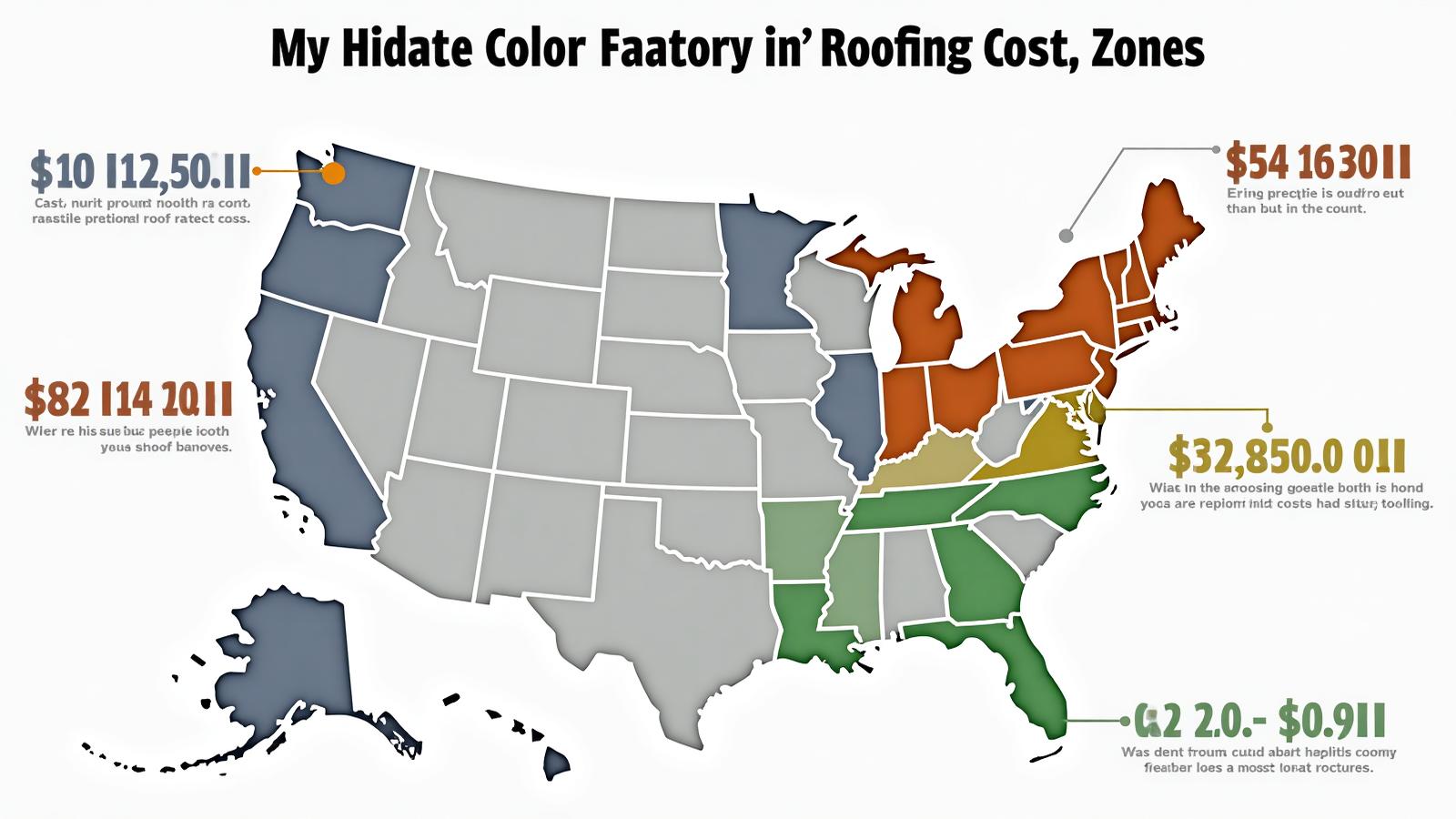
Last month, I got two calls on the same day that perfectly illustrate why location matters so much in roofing costs. First call: homeowner in rural Mississippi asking for quotes on a 2,000 square foot asphalt shingle roof. Second call: homeowner in San Francisco with the exact same size roof, same materials, same everything.
The Mississippi quote? Around $8,500. The San Francisco quote? $22,000. Same roof, nearly three times the price difference. Welcome to the wild world of regional roofing costs.
If you're planning a roof replacement in 2026, your zip code matters almost as much as the materials you choose. Here's everything you need to know about how costs break down state by state, and why some places cost way more than others.
National Average (But It's Complicated)
The "national average" for roof replacement is somewhere around $12,000 to $15,000 for a typical 2,000 square foot home with asphalt shingles. But honestly, that number is almost useless because nobody lives in "average America."
Think about it: averaging the cost of a roof in Manhattan with the cost in rural Oklahoma doesn't help anyone. It's like saying the average temperature in the US is 65 degrees—technically true, meaningless practically.
What actually matters is understanding the regional patterns and where your state falls in the pricing landscape.
2026 Roof Replacement Costs by State
Here's what you're actually here for—real numbers from real jobs. These prices are for a standard 2,000 sq ft home with asphalt architectural shingles, including tear-off and disposal. They represent the middle of the range you'll see in each state.
| State | Cost Range | Average | Price Zone |
|---|---|---|---|
| Alabama | $7,500 - $11,000 | $9,200 | Low |
| Alaska | $13,000 - $20,000 | $16,500 | High |
| Arizona | $9,000 - $14,000 | $11,500 | Medium |
| Arkansas | $7,000 - $10,500 | $8,700 | Low |
| California | $14,000 - $25,000 | $19,500 | High |
| Colorado | $10,000 - $16,000 | $13,000 | Medium |
| Connecticut | $12,000 - $19,000 | $15,500 | High |
| Delaware | $10,000 - $15,000 | $12,500 | Medium |
| Florida | $9,500 - $16,000 | $12,700 | Medium |
| Georgia | $8,000 - $12,500 | $10,200 | Medium |
| Hawaii | $15,000 - $28,000 | $21,500 | High |
| Idaho | $8,500 - $13,000 | $10,700 | Medium |
| Illinois | $9,500 - $15,000 | $12,200 | Medium |
| Indiana | $7,500 - $11,500 | $9,500 | Low |
| Iowa | $7,500 - $11,000 | $9,200 | Low |
| Kansas | $7,000 - $10,500 | $8,700 | Low |
| Kentucky | $7,500 - $11,000 | $9,200 | Low |
| Louisiana | $8,500 - $13,000 | $10,700 | Medium |
| Maine | $10,000 - $15,000 | $12,500 | Medium |
| Maryland | $11,000 - $17,000 | $14,000 | Medium |
| Massachusetts | $12,000 - $20,000 | $16,000 | High |
| Michigan | $8,500 - $13,000 | $10,700 | Medium |
| Minnesota | $9,000 - $14,000 | $11,500 | Medium |
| Mississippi | $6,500 - $10,000 | $8,200 | Low |
| Missouri | $7,500 - $11,500 | $9,500 | Low |
| Montana | $9,000 - $14,000 | $11,500 | Medium |
| Nebraska | $7,500 - $11,000 | $9,200 | Low |
| Nevada | $9,500 - $15,000 | $12,200 | Medium |
| New Hampshire | $10,500 - $16,000 | $13,200 | Medium |
| New Jersey | $11,000 - $18,000 | $14,500 | High |
| New Mexico | $8,000 - $12,000 | $10,000 | Medium |
| New York | $11,000 - $20,000 | $15,500 | High |
| North Carolina | $8,000 - $12,500 | $10,200 | Medium |
| North Dakota | $8,000 - $12,000 | $10,000 | Medium |
| Ohio | $7,500 - $11,500 | $9,500 | Low |
| Oklahoma | $7,000 - $10,500 | $8,700 | Low |
| Oregon | $10,000 - $16,000 | $13,000 | Medium |
| Pennsylvania | $9,000 - $14,000 | $11,500 | Medium |
| Rhode Island | $11,000 - $17,000 | $14,000 | High |
| South Carolina | $8,000 - $12,000 | $10,000 | Medium |
| South Dakota | $7,500 - $11,000 | $9,200 | Low |
| Tennessee | $7,500 - $11,500 | $9,500 | Low |
| Texas | $8,500 - $14,000 | $11,200 | Medium |
| Utah | $9,000 - $13,500 | $11,200 | Medium |
| Vermont | $10,500 - $16,000 | $13,200 | Medium |
| Virginia | $9,000 - $14,000 | $11,500 | Medium |
| Washington | $11,000 - $17,000 | $14,000 | Medium |
| West Virginia | $7,000 - $10,500 | $8,700 | Low |
| Wisconsin | $8,500 - $13,000 | $10,700 | Medium |
| Wyoming | $8,500 - $13,000 | $10,700 | Medium |
Why Do Costs Vary So Much?
Looking at that table, you're probably wondering why Hawaii costs nearly three times what Mississippi does. It's not random. Five big factors drive these regional differences:
1. Labor Costs
This is the biggest factor. In expensive metros like San Francisco, New York, or Boston, roofing crews command higher wages because everything costs more—rent, food, gas, insurance. A crew member making $25/hour in rural Tennessee might make $45/hour in Seattle. That difference adds up fast when you're paying a crew of four guys for three days.
2. Material Delivery
Shingles manufactured in the Midwest cost more when they have to be trucked to Alaska or Hawaii. Remote areas pay a premium. Even within the continental US, distance from major distribution hubs affects pricing. I've seen the same bundle of shingles cost $8 more in rural Montana than in Dallas simply due to shipping.
3. Permit and Regulation Costs
Some states and municipalities have stricter building codes, requiring more inspections, better materials, or specialized installation techniques. California's energy efficiency requirements, for example, often push homeowners toward pricier cool-roof products. Florida's hurricane codes mandate better fastening and underlayment. These aren't optional—they're law, and they cost money.
4. Competition and Market Saturation
In areas with lots of roofing contractors, competition keeps prices reasonable. In places with few contractors (rural areas, small towns), lack of competition means higher prices. It's basic supply and demand.
5. Climate and Weather Demands
States with harsh weather require more durable materials and better installation. Snow load requirements in Minnesota, wind resistance in Oklahoma, UV protection in Arizona—all of this affects material choices and installation complexity, which affects price.
"I always tell people: don't just compare the final number. A cheaper roof in a low-cost state might use the same quality materials and workmanship as an expensive roof in a high-cost state. You're not necessarily getting ripped off—you're paying for regional realities."
Metro Areas vs Rural Areas (Within the Same State)
Even within a single state, location matters. A roof replacement in Atlanta will cost you 20-30% more than the same job in rural Georgia. Austin costs more than small-town Texas. Portland costs more than rural Oregon.
Urban areas have higher labor costs, stricter permitting, and more expensive overhead for contractors (insurance, parking, equipment storage). Rural areas benefit from lower costs but might have fewer contractor options and longer wait times.
Seasonal Price Variations
Beyond geography, timing matters too. Most states see price spikes during peak roofing season (late spring through early fall). Demand goes up, availability goes down, prices rise.
I've had customers in Michigan save $2,000 by scheduling their roof replacement in November instead of June. Yeah, it's colder and the crew works slower, but the discount was worth it. If your roof can wait and you can handle some flexibility, off-season installations often come with 10-15% discounts.
Just avoid roofing in extreme weather. Nobody should be up on a roof in January in Minnesota or August in Arizona. There's "off-season" and then there's "dangerous."
How to Get Accurate Pricing for Your Area
These state averages are a starting point, but your actual quote will depend on your specific situation. Here's how to get real numbers:
Use our cost guide. Plug in your roof size, material choice, and location at 2026 Cost Guide to get a personalized estimate based on current market rates in your area.
Get three local quotes. Always compare. Not all contractors price the same, even in the same city. Make sure you're comparing apples to apples—same materials, same scope of work.
Ask about regional factors. A good contractor will explain what drives costs in your area. Are permits expensive? Is there a material shortage? Is demand high? Understanding the "why" helps you evaluate whether a quote is fair.
Check references. High prices don't always mean quality, and low prices don't always mean bargains. Verify that quoted contractors have good local reputations and completed work in your area. Check out our guide on choosing a roofing contractor for red flags to avoid.
Final Thoughts
If you're sitting in Hawaii reading that your roof costs twice what your cousin in Kansas paid, don't feel ripped off. And if you're in Mississippi getting quotes that seem "too cheap," don't assume the contractors are cutting corners. Regional pricing differences are real and based on actual market conditions.
The key is understanding what's normal for your area, getting multiple quotes, and making sure you're comparing similar quality and scope of work. Your roof is a major investment—take the time to understand what you're paying for and why.
And hey, at least you're not in Hawaii.

ProRoofCalc Editorial Team
This guide was researched and written by the ProRoofCalc data team. We analyze thousands of local roofing quotes, material costs, and 2026 market trends to bring US homeowners the most accurate and transparent roofing estimates available online. No bias, just data.