A customer in Phoenix called me last year, furious. She'd paid for a 30-year architectural shingle roof five years earlier, and it was already showing serious wear—curling edges, faded colors, granule loss. "The manufacturer lied," she said. "These shingles are garbage."
I went out to look. The shingles weren't garbage. They were good quality. But Phoenix gets 300+ days of intense UV radiation per year, temperatures regularly hit 115°F, and her roof faced southwest—maximum sun exposure all day, every day. Those shingles were getting absolutely hammered.
Meanwhile, I've got customers in Portland with the same brand of shingles, installed the same year, looking almost new. Why? Because Portland's mild, cloudy, temperate climate is way easier on roofing materials.
Here's the truth nobody wants to admit: those "lifespan" numbers you see on roofing materials? They're best-case scenarios. Real-world performance depends massively on where you live and what your climate throws at your roof.
The Four Major Climate Zones (And What They Do to Your Roof)
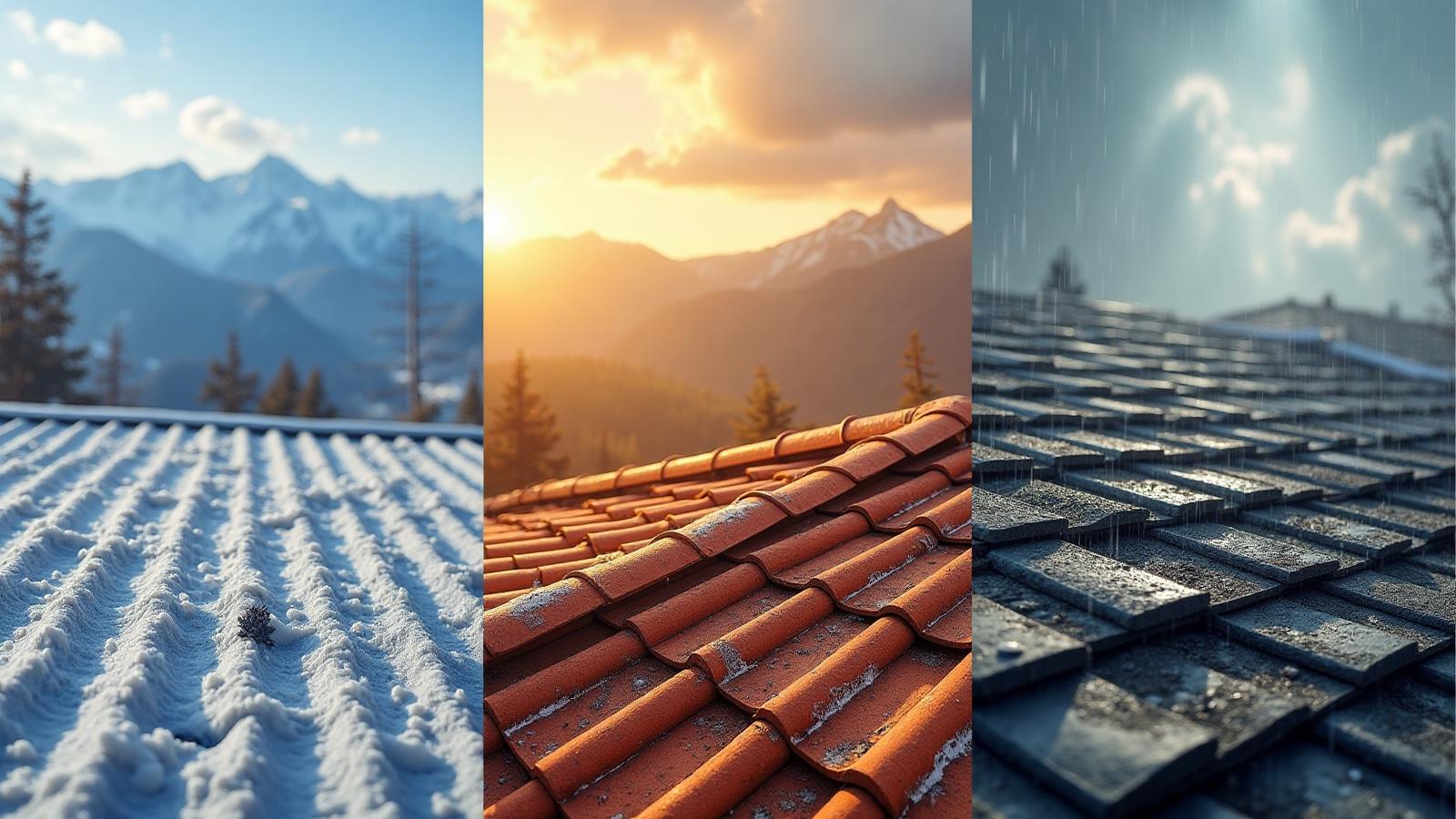
The US breaks down into four broad roofing climates, each with its own challenges:
Hot & Dry (Southwest)
Think Arizona, Nevada, parts of California, Texas, New Mexico. Intense UV, high temperatures, minimal rain. The main enemy here is heat and sun exposure. Materials degrade from constant thermal cycling and UV damage.
Hot & Humid (Southeast)
Florida, Louisiana, coastal Texas, Georgia, the Carolinas. Heat plus moisture creates perfect conditions for algae, mold, and rot. Hurricane-force winds are also a factor. Materials face biological attack plus storm damage.
Cold & Snowy (North/Mountains)
Minnesota, Wisconsin, Montana, parts of the Rockies, northern New England. Freeze-thaw cycles, ice dams, snow load, extreme temperature swings. Materials crack from expansion and contraction. Water infiltration from ice is a constant threat.
Moderate/Temperate (Pacific Northwest, parts of Midwest)
Oregon, Washington, parts of Pennsylvania, Ohio. Mild temperatures, frequent rain, less extreme weather. This is the easiest climate for roofing. Materials last longest here because they're not getting beaten up by extremes.
Real-World Lifespan by Material and Climate
Here's what actually happens when different roofing materials face different climates. These numbers are based on thousands of roofs I've seen, replaced, and inspected over the years.
| Material | Hot & Dry | Hot & Humid | Cold & Snowy | Moderate/Temperate |
|---|---|---|---|---|
| 3-Tab Asphalt Shingles | 12-15 years | 15-18 years | 15-20 years | 18-22 years |
| Architectural Shingles | 18-22 years | 20-25 years | 22-28 years | 25-32 years |
| Metal (Steel/Aluminum) | 40-50 years | 30-40 years (coastal salt) | 45-55 years | 50+ years |
| Wood Shakes/Shingles | 15-20 years | 10-15 years (rot risk) | 20-25 years | 25-35 years |
| Clay/Concrete Tile | 50+ years | 40-50 years | 30-40 years (freeze damage) | 50+ years |
| Slate | 75-100+ years | 75-100+ years | 50-75 years (fastener issues) | 100+ years |
| TPO/EPDM (Flat Roofs) | 15-20 years | 18-22 years | 20-25 years | 22-28 years |
Why Climate Affects Lifespan So Much
It's not just about hot vs. cold. Different climates attack roofing materials in specific ways:
UV Radiation (Hot & Dry Climates)
The sun is brutal. UV rays break down the chemical bonds in asphalt, causing it to become brittle. Granules that protect shingles from UV degrade faster. Colors fade. Materials dry out and crack. I've seen asphalt shingles in Arizona that look 20 years old after just 8 years. The constant intense sun just cooks them.
Thermal Cycling (All Climates, Worse in Extremes)
Materials expand when hot, contract when cold. Do this thousands of times and you get micro-cracks, loose fasteners, and material fatigue. Desert climates with 100°F days and 50°F nights are especially hard on roofs. So are northern climates with extreme seasonal swings.
Moisture and Biological Growth (Hot & Humid)
Algae, moss, mold, and rot love moisture. In humid climates, organic materials (wood shakes) rot faster. Even asphalt shingles develop ugly black algae streaks that hold moisture and accelerate decay. Metal roofs fare better, but coastal salt air causes corrosion on steel if it's not properly coated.
Freeze-Thaw Cycles (Cold Climates)
Water gets into tiny cracks, freezes, expands, and makes those cracks bigger. Tile and slate are especially vulnerable—freeze-thaw can crack them. Asphalt shingles hold up better, but ice dams (water backing up under shingles) cause leaks and premature failure.
Wind and Storm Damage (Coastal/Tornado Alley)
High winds rip off shingles, especially if they're old and the adhesive is failing. Hail punches holes in asphalt and dents metal. Hurricanes destroy everything. If you live in a storm-prone area, lifespan depends as much on "when's the next big storm" as on material quality.
"I tell people in Phoenix: if the manufacturer says 30 years, budget for 20. I tell people in Seattle: if it says 30 years, you might actually get 35. Climate isn't just a factor—it's THE factor."
Best Materials for Each Climate
Not all materials work equally well everywhere. Here's what actually performs best in each zone:
Hot & Dry (Phoenix, Las Vegas, Albuquerque)
- Best: Clay or concrete tile. They reflect heat, don't degrade from UV, and last 50+ years in desert climates.
- Good: Metal roofs (especially light colors). They reflect heat and hold up to intense sun.
- Acceptable: Architectural shingles with high UV resistance and reflective granules.
- Avoid: Wood shakes (fire risk) and basic 3-tab shingles (short lifespan).
For more on hot climate options, check out our guide on best roofing materials for hot states.
Hot & Humid (Miami, Houston, New Orleans)
- Best: Metal roofs. They don't support algae/moss growth and handle high winds.
- Good: Architectural shingles with algae-resistant granules (copper or zinc).
- Acceptable: Concrete tile (heavier, better wind resistance than clay).
- Avoid: Wood shakes (rot) and low-quality asphalt (algae staining).
Cold & Snowy (Minneapolis, Denver, Buffalo)
- Best: Metal roofs. Snow slides off easily, no ice dam issues, excellent lifespan.
- Good: Architectural shingles rated for cold climates with good ice/water barrier.
- Acceptable: Wood shakes if properly maintained and treated.
- Avoid: Clay tile (cracks from freeze-thaw) and low-slope designs (ice dam risk).
Moderate/Temperate (Portland, Seattle, parts of Midwest)
- Best: Basically anything works well here. This is the easiest climate.
- Good: Asphalt shingles get their longest life here. Wood shakes do great if maintained.
- Acceptable: Even 3-tab shingles can hit their rated lifespan in these conditions.
- Consider: Upgrade materials for aesthetics rather than necessity.
Maintenance Extends Lifespan in Any Climate
Even in harsh climates, proper maintenance can add years to your roof:
- Clean gutters regularly. Prevents water backup and ice dams in cold climates, reduces moisture exposure in humid climates.
- Trim overhanging trees. Reduces debris, limits shade that encourages moss/algae in humid areas, prevents damage from falling branches.
- Inspect twice a year. Catch small problems before they become big ones. Spring and fall are ideal times.
- Remove debris. Leaves, pine needles, and dirt trap moisture and accelerate decay.
- Address moss/algae immediately. In humid climates, biological growth is the enemy. Treat it or it spreads.
- Install zinc or copper strips. In humid areas, these prevent algae growth by releasing metal ions when it rains.
For a complete maintenance guide, see our article on how to maintain your roof.
Don't Trust Manufacturer Lifespans at Face Value
When a shingle manufacturer says "30-year warranty," that's under ideal conditions—usually defined as a moderate climate with proper installation and maintenance. It's not a guarantee for Phoenix or Miami.
Read the fine print. Most warranties are prorated, meaning after year 10 or 15, the manufacturer only covers a fraction of replacement cost. And they'll deny claims for "improper installation" or "inadequate ventilation" or a dozen other reasons.
The warranty is nice to have, but it's not something to rely on. What matters is real-world performance in your specific climate.
Final Thoughts
If you're shopping for roofing materials, don't just look at the price tag and the warranty length. Ask yourself: how does this material perform in MY climate? A cheap asphalt roof that lasts 15 years in Phoenix costs you more per year than a pricier tile roof that lasts 50.
And if a contractor tries to sell you wood shakes in humid Florida or clay tile in frozen Minnesota, find a different contractor. Material choice should match your local conditions, not just what looks good in a brochure.
Climate matters. Plan accordingly, choose the right material for where you live, and you'll save yourself money and headaches over the long run.

ProRoofCalc Editorial Team
This guide was researched and written by the ProRoofCalc data team. We analyze thousands of local roofing quotes, material costs, and 2026 market trends to bring US homeowners the most accurate and transparent roofing estimates available online. No bias, just data.